You can download the podcast to your computer or listen to it here on the blog. Additionally, you can subscribe via Spotify, iTunes, or Stitcher radio.
MORE SPECIFICALLY IN THIS EPISODE YOU’LL LEARN ABOUT:
- The role gender plays in how and why people apply for graduate jobs
- Why women might want to think about tailoring their approach in assessment centres
- Why you should definitely think about your preferred style of communication, and strengths and weaknesses
- The most effective way for women to ask for a pay rise
- If men and women seek fundamentally different things from the workplace?
- If women should change their approach to succeed in the graduate recruitment process?
SELECTED LINKS AND RESOURCES MENTIONED IN THIS EPISODE:
- Check out the ‘How to Get a Graduate Job’ step-by-step online course at https://howtogetagraduatejob.com/
- Don’t even think about applying for graduate jobs until you’ve read my free guide, ‘The 5 steps you must take before applying for graduate jobs’. Click here NOW. It will completely change the way you apply for jobs!
- Would you like a free 30-minute video coaching call? Simply select a time that works here https://calendly.com/gradjob/ We can go over your CV, application, or anything that you are struggling with.
- Assessment Day – One of the top providers of psychometric tests. Click HERE and support the show
- Career Gym – Use code GJP to get 20% off all of their tests!
- Job Test Prep – One of the top providers of psychometric tests. Click HERE and support the show
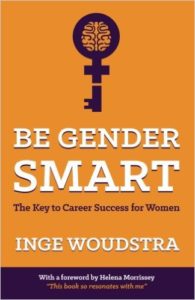
- Be Gender Smart: The Key to Career Success for Women
– Inge’s great new book. Click on the image below to buy NOW from Amazon!
-
- Inge’s website
Transcript – Episode 33 – How to be Gender Smart in Your Job Search, with Inge Woudstra
James: Welcome back to the Graduate Job Podcast, with your host James Curran. The Graduate Job Podcast is your weekly home for all things related to helping you on your journey to finding that amazing job. Each week I bring together the best minds in the industry, speaking to leading authors, entrepreneurs, coaches and bloggers who bring decades of experience into a byte size weekly 30 minute show. Put simply, this is the show I wish I had a decade ago when I graduated.
In episode 33 of the Graduate Job Podcast I speak with author Inge Woudstra, as we explore issues of gender and recruitment. We cover a wide range of topics, from the role that gender plays in how and why people apply for graduate jobs, whether women in particular should change their approach to succeed in the recruitment process, through to the most effective way to ask for a pay rise. Male or female, this is an episode, you’re not going to want to miss. As always, all links to everything we discuss and a full transcript are available in the show notes at www.graduatejobpodcast.com/gender. Before we start don’t forget, I love to hear your feedback so do get in touch either by email or twitter, on twitter I’m @GradjobPodcast, and email is hello@graduatejobpodcast.com. What you love, people or companies you’d like to see on the show, I’d love to hear your thoughts, so send them all my way. But now without further ado, let’s jump feet first into episode 33.
James: I am very pleased today to be joined by Inge Woudstra, author of the new book, Be Gender Smart, founder of W20 Consulting and also the web portal, Mum & Career.
Inge, welcome to the Graduate Job Podcast.
Inge: Oh, hello, James. Good to hear your voice again.
James: So before we start on the topic of gender and careers and recruitment, would you like to introduce yourself properly and tell us a little bit more about how you came to write the book, Be Gender Smart?
Inge: I started running my own business about six years ago working with women and with women returning to work, and I have a background in business management, so I went to university in the Netherlands — I’m Dutch — did business management there; then worked in companies like Siemens and Shell as a consultant in change management and training. And from that I ended up starting my own training business and training women returning to work.
James: Excellent. And as I mentioned, we’re going to delve today into your new book and look at recruitment and job choices through the lens of gender. So, starting at the beginning, women are told they can do anything that men can do and vice versa, but what does the research suggest with regard to differences between the sexes?
Inge: Well, you’re saying that right. The research does say we can take the same roles. Man can be just as good a parent as women can and women can be just as good a CEO as man can and we do achieve the same results. But it doesn’t mean we are the same and often it means we will take a different route to get to those results and that’s where gender differences come into play.
James: And as I mentioned, we’re going to think about this in light of recruitment. How do these differences manifest themselves with regard to how women and men might apply for jobs?
Inge: Well, just to take one difference, right? Man and women compete in different ways. Say, man compete on status: being the biggest, being the best; whereas women can compete on being the nicest, having a good relationship. So, for women it’s all about that relationship. For man it’s all about being the best. So then when you have to apply for a job, it tends to be slightly harder for women because in a job it is all about presenting yourself as someone who is absolutely the best which for women it feels rather insecure and unsafe because it may somehow not be very good for your relationship with the person you’re applying for. So women have an extra barrier there in the way, yeah, when they’re job hunting.
James: And I think that’s a really good point. Generally when I come across CVs and application forms, you know a CV is the one time when you need to shout from the rooftops about your achievements.
Inge: Yeah.
James: And I often find that people tend to downplay their achievements, or they aren’t explicit enough about what it is that they did and the results that came across. So would this be one of the areas where women might tend to hide behind the bushel?
Inge: Yeah, I think so, yeah. Women feel a bit shy of speaking up about those achievements. Of course she’s worked with a team; so basically the team did it. You did but you need to — Then at the moment it is about focusing on what’s important to that employer and I think if you take that mindset as a women it works very well. So put yourself — and women tend to be better in putting themselves in the shoes of others because their empathy system works very different in the brain, so they have more of the other focus — put yourself in the shoes of the person hiring and think, well, what will help them? And what will help them is to know what can you achieve. They’re not hiring your team. They’re hiring you. So they want to know, what did you achieve. They want — So you need to talk about I did this and then we achieved that. Don’t say “we achieved that.” Say, “and then I achieved this. This is what I achieved with the team. This is how I got the team involved. This is what I got the team to do.” So you can talk about the team but you talk about your own achievements within that.
James: I think that’s a great point and I see in the off quoted Hewlett Packard internal report, they said that men apply for a job when they meet only 60% of the qualifications but women apply if they meet 100% of them. Why might this be the case, then, for that difference in belief in putting themselves forward?
Inge: Yes, it’s actually not really a true piece of research but it, I mean it sort of — clearly, it sort of — it hasn’t happened the way it did. It’s cited a lot but when you look back at what HP actually did, this doesn’t, it’s not the outcome of that they said. That said, I think it’s a valid thing. Men do tend to — we all recognize that men do tend to go for jobs that they’re not even half qualified for. So I think as a woman you just need to be aware that organizations are designed for men, and they are — the processes in organizations, recruitment processes too are designed for man. So they work really well. They’re geared towards man. So if someone says, this is a fantastic job, we are only going to hire the best of the best, that is something that tends to really enthuse men. They think, oh yeah, I’m the best of the best. I’m going to apply. But something that tends to put a lot of women a bit off. Oh, I’m not sure if I’m the best of the best. So to keep that in mind, you know, this is designed for man, this is speaking to man, and translate that in your own mind and say what they’re actually saying, we’re looking at someone who is really passionate and we’re looking at someone who can do this job. So it’s almost like having a filter for words like that and knowing it’s written for man.
James: We talked, just before we started recording, about the need for people to be authentic in how they apply for jobs. Do you think it’s the case, then, that women need to — as you said if the recruitment process is geared towards men — should women then almost adopt some of the male characteristics, especially as they get through to the later stages, assessments centres or interviews? Or, do they need to just be more authentic to who they are in terms of how they might deal with situations?
Inge: Yeah, I think that’s a really good question because I think it’s sort of what women have done traditionally in the past to let’s say, forward since 1960’s when they came into job roles. They looked around and realized their way of working didn’t work and then adapted to what man do. And I’m actually trying to encourage women to be more authentic, to actually find ways to work from your own strengths. So for instance, women, because they compete from being nice, have this focus on relationships, tend to have focus in others, puts themselves in other’s shoes, they’re actually really good at creating buy-in. So women ask more questions. They are more about, okay, I have this idea. What do you think? Now, in a job interview that isn’t necessarily a brilliant skill. So you need to then find a way — because you’re presenting yourself. You’re not asking questions. You’re not creating buy-in, but you can build relationships; so to think of what can you do with your strengths in that job interview rather than just following what man do.
James: Because I was reading through the book and I was thinking specifically with regard to group exercises which form a big part of lots of the big graduate schemes, so group exercise may be six to eight of you, you’re given a task. You have a short period of time, maybe 45 minutes to read a brief then to come to a consensus, amongst of the group, and to then recommend a course of action. It is interesting when I’ve been assessing group exercises, you know, you’re looking at, you have some criteria and you’re looking at the dynamics of the group, who are the people who are speaking? Who’s bringing other people into the conversation? Who’s putting forward good ideas? You know, who’s timekeeping or who’s doing keeping notes, et cetera. So there’s lots of different aspects and having read the book, it then came to my mind that, you know, some of them were more masculine traits and some of them were more feminine traits.
Inge: Yeah.
James: Which is the consensus and the buy in
Inge: Yeah.
James: Thinking in that example, how can women maybe standout and standout authentically without the need to —
Inge: Yeah, that’s right. I see what you’re saying. What does that mean for women if you do have a style that is more focused on relationship building and consensus building, that’s focused on asking questions, getting other people involved, if that’s your style rather than a more commanding style where you present an idea and expect others to buy into it, which tends to be more of a male style? You’re going to be less visible and you’re going to be less visible as a leader. You’re facilitating that discussion, you’re an important part of the team process, important part of the team process but it may not always be visible that that was your influence. So what you then need to do is before or after in the job interview, describe your way of working. Say, gosh, yeah, when I worked at, let’s say in the newspaper for university I gave leadership by building consensus. Give some examples of how you do that. So, you need to already be aware of how you work as a woman and then be able to talk about that and talk about how that brings results. So if that’s the case, the interviewers will be looking for supportive evidence. I mean these group exercises are not stand-alone things. So the group exercise is linked to what you’ve been saying about yourself. So if you say, this is how I work, hey, I actually focus on consensus building or I focus on seeing the big picture so I tend to ask a lot of questions at the beginning, because women have more connections in their brains then men. So because you have these more connections in your brain you’re often seeing impact and consequences that man aren’t seeing. Men tend to be more focused. They have more separate compartments in their brain where things are processed. So within that separate compartment they can easily, it’s easier for them to keep the discussion on one topic and then, oh, gosh, women bring up another thing. But actually that thing might be very important. So one, do bring it up, the things that you see that others don’t think is important. And two, frame it so that others can see it. So don’t say, oh, gosh, I have another question. Link it to what other people are, other’s people’s priorities. So if somebody in the team discussion says, yeah, we need to make sure we deliver in time. Say, yes, and in order to deliver in time I have a question. It’s key to me to deliver this in time but we also need to keep the client happy. And then come with your suggestion about how to keep the client happy, even though it isn’t linked to time. Does that make sense?
James: Yeah, and I think it’s a really good point and it’s linked to something which we’ve discussed often in the podcast which is before you start applying for jobs and at the front end of your job search, you need to be very clear and have that self awareness around what your values are and what your strengths are and as part of this, as you mentioned, what are your ways of working. How do you naturally start working in different situations and if you can go into a interview and you know, when you’re discussing different aspects in the interview you can talk about, well, actually, I tend to find I work very well in this situation, or I have these particular strengths, it will certainly make you stand out above the crowd because most people just don’t think about this.
Inge: Yeah, I think that is — Yeah, that is right and especially, I think, for women because their way of working tends to be a bit less visible. So they need to talk about it more.
James: You mentioned earlier that workplace is designed by men for men. Could you expand upon this and what you mean by it?
Inge: Well basically — yeah. Man are used to work. When work outside the house was created, it was man doing it. Offices, more graduate type jobs have been done by man for many decades. And yeah, so naturally almost for every, the way things work in organizations is focused on what works for man and what works for man is remember how they compete for being the biggest and the best? So in an organization that’s fine because it’s all about competition, for man it’s important. It’s a psychological thing. Men find their security being at the top. You know when they’re at the top, no one can attack me. I’m safe. Women find security in their friendships. When I’m friends with someone, I know no one is going to attack me. So I feel safe. So in an organization it is all about, then, about status and hierarchy, about being able to feel at the top. There’s rewards. It’s about winning, we talk about the war for talent, we’re competing with our, we’re having battles with our competitors but we need to win. This is all a language that really ties into how man feels safe and how man compete.
James: So looking ahead, then, to starting work in the world of work, what are some of the common issues that women face when they start working in a tend to be large employer?
Inge: Yeah. I just hate to say that women have issues. I say employers have issues.
James: That’s a good challenge.
Inge: I mean, in the end employers need to be more aware of how women work and the talents that women bring. But I think as a women it’s important, I think it’s important you don’t emulate. The two things, actually, I think you need to do is don’t emulate the man around you that look how women do things; and observe how this world works. You know, I like this when I say organizations are designed for men and then if you ask women to be successful in those organizations it’s like asking a fish to climb a tree. So here you are this fish, just watch how they climb trees; watch what it’s like in the jungle so you know what works for them. So for instance, when man makes decisions, they — and I mean, this is all, I mean I describe it in more detail in the book but I’m summarizing it here quite crudely — but they tend to focus on things like data, facts, you know, graphs, pictures, images. So when women tend to have a very different style of gathering information for a decision. They ask other people. Oh, what have you done before which is basically gathering best practice. What happened in history? How did other people do that? So it’s more about people and gathering opinions and then they take a decision. But when you’re talking to a – so, when you’re in an organization and you’re talking to a man, I think it’s important to make sure that you’re being heard. So you want to give short answers which helps man with their focus. You want to talk about numbers and about results. So you tie into that data focus and when you say, rather than saying, oh, I’m going to just have a chat with some people, find out what they did, you say, I’m collecting data to find vital evidence so we can take a decision. So it’s really just about framing it so man can hear what you’re doing.
James: So careful use of language to push the buttons of —
Inge: — the man that you work with, yeah.
James: Speaking to friends and asking them questions that they’d like to see covered on this, on this podcast. So I spoke to one of my female friends, the question that they wanted asking was, pay.
Inge: Yeah.
James: Pay and how to have the conversation around getting a pay raise because it was something that they found very difficult and challenging. We wanted to know the best ways to have that conversation with their male bosses.
Inge: Yeah, it’s interesting because it’s something — See, women are — From a very young age men grow up with that sort of competing on being the biggest and the best. So three year olds boys are already focusing on the playground, look at me being brilliant and you know what, my dad got a bigger car than your dad. That’s the stuff boys do all the time and when girls try and do that same thing, other girls will not accept that. You’re instantly out of the group because you’re competing on being nice and it’s not very nice to say you’re better than someone else. So by the time man enter the workforce, they’ve honed that as a very fine skill. You know, my ten year old no longer talks like that.
You know, he very subtly drops, and he’s a boy right. So he now very subtly drops things into conversation that make it sound like he’s very good, but it’s not so boasting. He knows it’s not allowed and the teachers really won’t look favourably on it. So he’s learned not to boast but still people will know he’s absolutely brilliant and that dad does have a bigger car, you know.
So by the time women enter the workforce, they haven’t had that 20 years of practice of how to really sound like you’re great but not boast. So then women go and negotiate and they do it, tend to do it too bluntly. In a sort — They come in — about one of the male managers who hires people regularly says, and then they come in and they say, well, this is what I’ve got to earn and I’ve got three other offers and I’m going to go for those if you don’t give me this money, which is then for the person on the other side of the table, not very nice; whereas man do it very differently. Man goes, gosh. I’ve got this fantastic background. I’ve done these other projects where I achieved really great results so I expect that that will be reflected in the pay package and that then gives the employer, yeah, some advantages. So for a women when she negotiates — I love what Sheryl Sandberg said on this. Also when a women negotiates it’s also viewed differently because we expect different things from man and women. So women are often when they do say, yeah, this is what I expect. They’re instantly seen as a bitch. So the advice Sheryl Sandberg gives and I think that would work very well, is to then frame it slightly different. Say, so link it to other people, link it to teams. So say, gosh, yeah, obviously it’s very important for my entire team that we charge enough. So that’s why I’m going to now charge you more for this project so the team’s efforts are reflected. Another way of doing it is saying, while women are always taught to negotiate so obviously, and I’m a feminist so I want to be on that side, so I’d love to do the negotiation here. So find your way so you can frame it or link it to something external.
I think for women, also, why they hesitate about putting themselves forward is because that psychological factor, not wanting to put yourself forward and competing on losing those relationships, not feeling safe when you don’t have your friends around anymore, is such an important psychological thing that it’s hard to ask for something. I think then it’s important again to put yourself in someone else’s shoes because your boss wants to pay you more. Also you’re in this jungle, remember? You’re climbing a tree. Everyone else is going to be judging you on how much you’ve earned. So maybe you don’t need that money but it’s going to tell other people what you are worth. So I personally thought it wasn’t very important to me, money. I never negotiated about anything. But then I looked for other jobs and instantly they would ask, so what level are you at now? And I’d say, oh, yeah, I’m at a medium consultant level. And then they’d see my pay and they’d be like, oh, wow. That’s more or less what the juniors get here. So we assume you do more of a junior job. My qualities, my output was linked to that pay package. People didn’t look at, oh, she’s done some really interesting projects. They look at how much has she been paid, and once I knew that, I thought, okay, pay is not important to me but other people judge how good I do my work on how much I’m paid and once you know that I think, yeah, pay is important to you.
James: That’s a really interesting way of putting it. That’s a good point. So everyone listening, just go out there and be confident and ask the question.
So thinking Inga around some practical tools that women can use to help them both in recruitment and once they get into the workplace, would you recommend joining, say networking groups and women in business groups and things like that?
Inge: Oh, thanks for that question, James, because absolutely yes. I think especially if — there’s this research with head teachers which I love in the Netherlands where they, yeah, women when they’re out of that group of friends, so when for instance when they get promoted, they feel quite insecure. So man feels safe. They’re on top of the world. No one will attack them. They tend to sit up and enjoy being in charge because the fact gives them a safe feeling. For women it’s the opposite. They’ve known less the team. They’re no longer the teacher. They’re the head teacher. And they gave these head teachers a group of peers and in that group of peers these head teachers could talk about the tensions they had, the issues they had and they found a lot of recognition and that really gave them confidence. Oh, other people have these issues too. Now I’m getting comfort. Okay, so it’s okay to have those issues. Hey and I’m solving them, and then you get new ideas of how to solve them. You just have a place to vent those emotions and knowing this, there’s people there that listen and aren’t going to judge you as a bad head teacher just because you need to vent something and women need that sort of place to feel secure. Man need to vent somewhere too but they tend to find it with one woman in their life, let’s say their mom or their partner and they’ll absolutely not ever share that with their friends at work at all because that wouldn’t be safe. It’d be about losing face which would be horrid. So for women you need to be careful not to do that at work and when you’re there, obviously when you’re, yeah, looking for jobs, I think it’s very important to find safe places to do that. So maybe find someone else who’s looking for a job; find an aspiring partner that you can work with; find a coach or a mentor; or find a group of other people that are also looking for jobs. I think that’s important. That’s the security part. But then if you’re networking to find a job, see that as something different. So when you are out there looking for jobs and sort of building relationships, then it’s about the job and it isn’t about all these things that you can’t do, the bad experiences you’ve had. Then you’re selling yourself and you do need to talk about what you’re good at, what you’ve achieved, what kind of job you’d like and what your ambitions are. So there’s basically two types of networking that women need to do whereas man tend to do the one type of networking.
James: It’s brilliant advice. Yeah, I have not thought about keeping them separate but it makes complete sense.
Inge: Yeah, it’s helpful if you keep it separate in your mind. So you do need a group where you can vent online or in real life or somewhere, but you also need groups where you’re actually, yeah, actively putting yourself forward as someone who can do the job well.
James: And through the internet, through sites like Meetup, it’s real easy to set up and find groups and also to set up your own.
Inge: Yeah. Yeah. Yeah, that would be good. Yeah, set up your own and that’s why I often recommend women, there must be a lot of other women out there in the area that are also looking for jobs. So set up your own, yeah. And obviously that can lead to jobs but I think you need to sort of separate the two so you know you’re doing something that is effective. So you don’t think, gosh, I’m only chatting in that group so really I’m not, my job is not going to come from there. Let’s no longer go there. Actually, it tends to be very important for confidence and inspiration.
James: Inge, unfortunately time is running away with us. But before we finish, let’s move on to our quick fire question round which I ask each of my guests.
Inge: Right.
James: So, first off, what one book would you recommend that our listeners to read?
Inge: Well, is it okay if I say my own book?
James: You certainly can.
Inge: So, Be Gender Smart, The Key to Career Successes. I think it really helps women that are starting out in their career to understand, to help them look at that jungle, look at that tree and really get a head start knowing how they should act.
James: Excellent. And I’ve read the book; really recommend it and this all will be linked to in the show notes. So, check out the show notes at graduatejobpodcast.com and you’ll find a link straight to the book.
And Inge, what one website would you recommend that our listeners visit?
Inge: It’s been a long time ago I looked for a job last so I mean, I didn’t — I think it — What I think is news about the organization you’re going to apply for, really follow them in the news and make sure what’s happened. Just spend the week before your job interview, make sure what’s happening so you can link to that.
James: That’s great advice. There’s nothing more powerful than walking into the interview and knowing everything about the company and knowing about the latest, whether it’s share price movement or new CEO or new products they’ve launched. It really stands you in good stance.
Inge: Yeah, and especially if some internal things are going on like they’re just being taken over by another company or — which often happens just the week you’re being interviewed — or if there is a big review coming up and they’ve just done really well, women tend to be, to see and hear different things from man. So women pick up a lot of signals and that can make them really insecure in a job interview because you’re thinking this is all about you, but actually a lot of it can be about what’s happening outside of you and in that person’s mind. So let that go. What you’re seeing and feeling in an interview may not be of value.
James: It’s a good point. And finally, what one tip would you give that our listeners can implement today on their job hunt?
Inge: Yeah, I think it’s about being really aware of how you work and how you achieve results so you can talk about that. So how do you lead? What do you do to get people where you want them to go? Why do people listen to you? How did you get them to listen to you? And how do you get, how do you convince people of your ideas? How do you create followers, and to be really aware of your own behaviour there so you can really confidently talk about that.
James: Completely echo that. Self awareness of your skills and your strengths will take you a long, long way.
Inge: Yeah.
James: Inge, before we finish, what is the best way for people to get in touch with you and the work that you do?
Inge: Probably via the book website because the book website is called begendersmart and it’s got all my details on there and then you can just send me an email. You can find me on Twitter as well or — should I name that? Or are you going to put that on your website?
James: I can link to that as well on the show notes.
Inge: And anyone who chats to me on Twitter I’ll have to chat back with.
James: Perfect. Inge, thank you very much for your time today and appearing on the Graduate Job Podcast.
Inge: Okay. Thank you and to all the women out there I’d say you can do it. Just stay for it because we really need you at the top.
James: Many thanks to Inge for her time. 3 things stood out for me from our chat which are applicable across the sexes. The first was a point linked to the issue of different male and female characteristics in the recruitment process. Do you like to dominate the conversation, do you like to build consensus, and buy in. How do you lead people, how do you come to decisions? It all boils down to thinking about your yourself, your strengths and characteristics, because ultimately you need to know yourself. As Aristotle said, ‘knowing yourself is the beginning of all wisdom’. If you can go into the interview and talk about your strengths and weaknesses honestly, or how you like to work, or how you like to get people to a decision. You will stand head and shoulders above the other applicants. Now you might be thinking, but I don’t have a job, how can I think about these things. But think about your group exercises at university, part time jobs, dealing with friends or difficult situations. The difficult part is just sitting down to think about it. Take the time and do it now, you wont regret it.
The second takeaway for me is on understanding the impact of the language you use, and having an awareness, that it is going to impact people in different ways. I had training years ago from a brilliant trainer called Gareth Bunn, who described communication as an event in the others person mind. What he meant was, you might think you are communicating clearly, but unless the person listening is understanding it in the way you intended, the communication hasn’t been successful. As Inge said with the example of talking to a male boss, to communicate effectively to them you might have be shorter and sharper, give them figures and data. Which might not be your preferred normal style of communicating. As Chris Delaney talked about in episode 28, the language you use and the way you use it impacts massively on how you can build rapport. So think about the person you talking to, and think about what it is going to be the best way for you to get your message across.
And finally, I loved Inge’s point about finding that network who can help you on your jobsearch. Be it for support, but also for networking. Networking groups are a massively under-utilised approach for graduate job seekers. Lots of people find them daunting, which is exactly why you should use them. Listen to my interview with Brad Burton, and also Stefan Thomas for hints on how to network effectively. And do look at sites such as MeetUp.com, there are hundreds of women in business, or career groups on them. If there isn’t one in your area, start one, you never know where it will lead. And if you do start one, let me know, and I’ll publicise it on the show.
So there we go, 33, finished. If you’ve enjoyed the show let me know on Twitter, my handle is @gradjobpodcast, or email hello@graduatejobpodcast.com and please do leave a review and subscribe on ITunes or Stitcher radio, as I say every week it’s the best way other than sharing us with your friends to show appreciation for the podcast and it helps massively in the rankings, so that other people can find us. Do join me next week when I have a fascinating guest, former cleaner turned bouncer, turned BAFTA award winning author and film maker Geoff Thompson, as we go deep and examine what fears might be holding you back in your job search. You’re not going to want to miss it. I hope you enjoyed the episode today, but more importantly I hope you use it and apply it. See you next week.