
This week I speak with Prash Majmudar, Chief Technology Officer for hot London tech start-up Growth Intelligence, as he shares with us everything you need to know about how to get a job in data science. Prash delves into all aspects of the recruitment process, from what you need to do to stand out in interviews, to his top tips on how to let your data science skills speak for themselves. It’s well worth listening to no matter what you’re applying for, as Prash’s insights into the application process more generally are priceless.
You can download the podcast to your computer or listen to it here on the blog. Additionally, you can subscribe via iTunes, Spotify, or Stitcher radio.
MORE SPECIFICALLY IN THIS EPISODE YOU’LL LEARN ABOUT:
- What exactly data science is, and why it is the sexiest job of the 21st century
- How Growth Intelligence recruits its data scientists
- How you can make your data science application stand out from the crowd
- How to get a job with a hot tech start-up
- How to impress at the face to face interview
SELECTED LINKS AND RESOURCES MENTIONED IN THIS EPISODE:
- Check out the ‘How to Get a Graduate Job’ step-by-step online course at https://howtogetagraduatejob.com/
- Don’t even think about applying for graduate jobs until you’ve read my free guide, ‘The 5 steps you must take before applying for graduate jobs’. Click here NOW. It will completely change the way you apply for jobs!
- Would you like a free 30-minute video coaching call? Simply select a time that works here https://calendly.com/gradjob/ We can go over your CV, application, or anything that you are struggling with.
- Assessment Day – One of the top providers of psychometric tests. Click HERE and support the show
- Career Gym – Use code GJP to get 20% off all of their tests!
- Job Test Prep – One of the top providers of psychometric tests. Click HERE and support the show
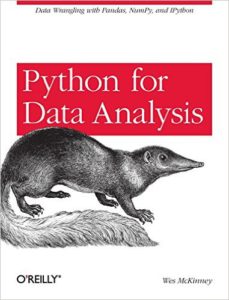
- Python for Data Analysis – Prash’s book recommendation. Click the image below to buy now from Amazon!
-
- growthintel.com -The website of Prash’s company
- github.com – Prash’s website recommendation 1
- kaggle.com – Prash’s website recommendation 2
- coursera.org – Prash’s website recommendation 3
Transcript – Episode 21 – How to Get a Job in Data Science, with Prash Majmudar
James: Hello, and welcome to the Graduate Job Podcast with your host, James Curran. The Graduate Job Podcast is your weekly home for all things related to helping you on your journey to finding that amazing job. Each week I bring together the best minds in the industry, speaking to leading authors, entrepreneurs, coaches and bloggers who bring decades of experience into a bite sized weekly 30 minute show. Put simply, this is the show I wish I had a decade ago when I graduated.
This week I speak with tech expert and CTO of one of London’s hottest start-ups, Prash Majmudar, as we delve into the world of data science. Prash gives us a lowdown on exactly what you need to do to get started in this cutting edge field, how you can stand out from the crowd, and top tips to navigate through the recruitment process. Even if data science isn’t your bag, it’s still well worth a listen for Prash’s insight into how to get experience, and the application process more generally. Without further ado, here is Episode 21.
Welcome to the Graduate Job Podcast Mr. Prash Majmudar. Prash is a Chief Technology Officer at the London start-up, Growth Intelligence, and he has spent his career working in defence and security software for government and large corporations.
Prash, a very warm welcome to the Graduate Job Podcast.
Prash: Thanks, James. Pleasure to be speaking to you today.
James: So, before we delve into the topic of data science, would you like to give us a quick introduction to your background and what you do over at Growth Intelligence?
Prash: Sure. So my background, as you mentioned, I’m the CTO at Growth Intelligence. I’ve been leading the technology team for the last three years. Prior to that I spent about seven or eight years in the defence industry building software systems for defence customers and prior to that I was actually a graduate in physics. So I’ve kind of moved into an engineering and data science career from a scientific background which might be interesting to some of your listeners.
Growth Intelligence itself is a start-up in London, as you said. We’re growing fast. We just raised some funding. So we closed a funding round with some VCs in February. So we’re looking to grow our team significantly this year. We build, basically, a predicted marketing product. So we sell to large enterprises; customers like Amex and Google, Vodaphone. We help them, basically, build their pipeline of businesses and grow their revenues. So the way we do that is we collect data on businesses. There’s tons of data, and I’ll talk about this in more detail, and then we use all of that data to try and predict who will buy Amex products or Google products. So, kind of like a recommendation system, a bit like Netflix which I’m sure everyone uses.
James: Excellent. I have to admit my ignorance before I started researching the topic of data and data science and the background to this episode was I received an email from a Pete Kindell who said, ‘love the show. Could you do an episode on how to get a job in the field of data science? I’m studying for an engineering degree and would love to find more information about getting into the industry’. So I started researching about data science and I was surprised to find that the Harvard Business Review called the data scientist the sexiest job of 21st century, which did surprise me.
Prash: Yeah.
James: And Google and Facebook and any tech company worth their salt are currently crying out for data scientists. But Prash, what exactly is a data scientist?
Prash: That a very good question. So, data science itself, perhaps if I introduce that, is essentially trying to make sense of the worlds’ data. So it’s about extracting information or knowledge from data. So we live in the kind of information age. There’s huge amounts of data out there. As you mentioned, Google and Facebook collect loads of data. Everyone has data. So information about their, you know, where they’ve been. So for example I can look at my Google account and it will tell me all my past journeys over the last couple of years, where I’ve been. It has all my emails; has my calendar for the last two years. Facebook has all my pictures. Netflix knows what shows I’ve watched and what video films I’ve watched. So there’s tons of information out there. You know, businesses are constantly online putting more and more information out there. People are online putting more and more information out there and it has got to the point where human beings themselves can’t cope with all of this information. They can’t make sense of it themselves. So they use machines to try and make sense of all of this data and extract meaningful information. And being a data scientist is basically that, it’s about building the machines, the software, the tools, to try and make sense of this vast amount of data that is out there and try to get useful stuff out of it. So kind of examples I’ve mentioned, you know, when Netflix recommends that you should watch this film or when Amazon recommends you should buy this camera or when Facebook automatically tags your pictures with people it thinks are in it, all of that is built from data science algorithms.
James: So it’s deciphering the vast amount of information out there and making it into something which is worthwhile and you can make money from.
Prash: Exactly. And it doesn’t have to made money from. It can just be some useful insight. So, you know, research is obviously working data science and people using it to try and make inroads in biotechnology. Drugs companies do a lot of data science work, actually, because they’re trying to identify or medical researchers are trying to identify new drugs that could be used to cure, you know, different conditions based on all of the data they’ve got on medical trials that have been previously carried out.
James: What are the typical academic backgrounds of data scientist? So are we talking computer science, statistics, engineering? I’m guessing it’s not liberal arts and classics.
Prash: Well, yeah, no. I mean, you’re exactly right. I think it’s anyone with a kind of analytical brain, I suppose, can go into data science, but there is a creative element to it as well. So you don’t need to be a computer scientist. Data science itself is a combination of a few different disciplines. So it’s the application of statistics. It’s the application of programming as well, machine learning which is kind of a computer science background, but it’s also things about visualizing the data and presenting it to normal people, you know, lay people in a way that they will understand. So it can be people who come from quite different backgrounds end up switching into careers in data science. So, but typically the standard kind of route tends to be people who come from a science or computer science background or maybe a maths or statistics background.
James: And you mentioned the need for analytical awareness. What other key skills do you need to get into data science?
Prash: I think you’ve got to have a lot of patience, I would say and there’s a lot of data out there and being, taking a patient and scientific approach to the data that is out there makes a lot of sense. I think it helps if you’ve got some programming skills. I would — there are quite high levels tools out there that mean that you don’t need to be a, you know, you don’t need to be kind of a super hacker or anything like that but it does help if you’ve got some basic programming skills. And actually, there’s a lot of online resources out there that will help you pick those skills up. But it also helps if you’re used to, as I say, communicating your ideas and having strong communication skills or presentation skills.
James: So if you can program “hello world” in Java, you’re halfway there.
Prash: Yeah. Yeah, pretty much. I mean, I guess a lot of data scientist these days will tend to use languages like Python or R is a very popular language which is also, I think that’s more of a statistical tool and there are also tools like MATLAB as well. But then there are even higher level ones like kind of, you know, user interface where you saw drag and drop boxes around, build models, things like RapidMiner and other high level tools. So you don’t need to be a hardcore hacker but yeah, HelloWorld helps.
James: RapidMiner sounds like an older computer game.
Prash: It does a bit, yeah. Yeah. Our CEO actually, was using RapidMiner in the early days of Growth Intelligence. So, you know, everything has a background.
James: Excellent. And what would a data scientist be actually doing on a day-to-day basis. Is it basically literally stuck behind a screen bashing away?
Prash: Yeah. So, yeah. I mean, certainly a lot of the work is, as in any kind of scientific discipline I suppose, it’s about exploring the data or information that you have. So, yeah, a lot of it might be gathering datasets, you know. There’s a lot of information out there. You might be able to plug into Facebook data. Some of this data is available, you know, they make available themselves. There’s a lot of government open datasets. So the government is very committed to opening up information and transparency around what’s used. So there’s a lot of kind of publicly available information or data that might be out there and a lot of your time might be spent gathering that data, trying to clean it up, trying to put it into a form that it can be then used by an algorithm. But yeah, I mean, I guess a lot of that is going to be in front of the PC or your laptop or whatever, bashing away, as you put it, yeah.
James: Maybe an unfortunate turn of phrase there.
Prash: Yeah.
James: So you talked about Growth Intelligence growing rapidly and now you’ve got the VC funding and I saw on your website that you’re actually recruiting data scientist at the moment amongst other roles. Could you talk us through the recruitment process for how you’re actually going to recruit the data scientists and what that involves?
Prash: Yeah, no problem. So yeah, we are growing pretty rapidly and we’re looking to rapidly increase the team. We’ve already got a very experienced team of data scientists and engineers. So we really want people at all levels to join us, both at graduate and junior levels but also senior data scientists who have experience in industry.
So the sorts of things we would do is, obviously our standard process, we would have an initial phone call just to have chat through with the candidate and get a feel for their, what they’re looking for and whether Growth Intelligence might be good fit for them and maybe just try and understand why they’re interested in Growth Intelligence. We have a reasonable amount of information out there about us and then if we decide to go forward, we’d normally have a technical interview which is a two hour, or one and a half hour interview where we would just explore the candidate’s background and their experience. So we might ask some technical questions. Perhaps if they’ve got a project they’ve worked on or perhaps if they’ve done any kind of hobby projects or anything like that where they’ve actually just tried to, tried to get a better feel for the field by looking at all of the stuff that is online.
And then, at the final stages we actually ask people to come in and spend a day with us which is, obviously, a reasonable amount of commitment out of someone’s schedule, but it actually gives us and them a really great way to understand each other. So they can come in for a day, work on a real problem. We’ll probably give them some data. We’ll ask them, pose them a question, ask them to try to make some sense out of it and they’ll basically have a day to kind of hack away with the data and see where they get to . And really what I’m looking for on that day, it’s just that kind of spark of creativity to see what they come up with but also how they communicate with us and how they engage with the team. It’s obviously really important being part of a start-up that you communicate and get on really well with the rest of the guys on the team. So that’s kind of our overall process but I’ll be happy to dig into that in more detail.
James: Yeah. So if we just go through each of those parts step by step. I saw on the website that on the initial stage you could send your CV and also apply via LinkedIn.
Prash: Yeah.
James: How would the LinkedIn application work? I have not seen that before?
Prash: Yeah. Essentially everything gets funnelled through to our hiring team. Basically if it’s a LinkedIn application it will take the information that’s on your LinkedIn profile and that will be pushed into our system. So that will be in lieu of your CV or resume, if you don’t have one. So we try and reduce the barriers, essentially, to make an application. We want people to apply; right? So I guess in that case it’s important that you have a rich LinkedIn profile. Certainly I will go and have a look at candidate’s LinkedIn profile and see what, you know, what they’ve got under their skills, what experience they’ve got, whether they’ve actually worked on any external projects.
A really good way to break into this industry, I would say, is to actually just try and work on a problem at home. There are plenty of online courses and online problems where you can actually just spend a day or two just trying to get your head around a problem, commit some code and you know, put that out to the world to see and that’s sometimes a better CV than your, you know, than your CV, basically.
James: And, sticking with the CV, I mean how many applications are you expecting to get for the roles? I mean, how many roles are there available?
Prash: I think in total across the company we’re advertising for about 10 different roles. But in terms of the technical elements, we’re looking at graduate developers, graduate data scientists, and senior data scientists and senior developers. So, four roles, really.
James: And how many applications would you be expecting, for say, the data scientist role?
Prash: I would expect we should see hundreds of applications for that role. I mean, it’s a very popular and competitive space at the moment. So there are plenty of people out there trying to get into this role. So if there’s anything you can do to stand out and also make it as easy for me to understand why you’re interested in us as a business and why you’re interested in the field will help us.
James: Again with the CVs, what is it that you would be looking for on a CV? What’s going to make them stand out and what’s going to go through to the “yes” pile and what’s going to put them in the bin?
Prash: Sure. So obviously it helps if you’ve got a kind of relevant academic background, a strong academic background. So if you studied in physics, maths, computer science, engineering, statistics, biology, chemistry, anything like that, that will help; if you’ve got a relevant project from your background. So let’s say — or if you’ve studied a Masters as well, that will stand out. So if you’ve got any experience in machine learning itself or in data science in terms of any projects you’ve done. Also if you’ve got — I mean, I’ll be honest, also, we’re very, most hiring managers and most managers in general are pretty busy people. So I definitely recommend keeping your CV to, you know, one page or maybe two pages maximum and really having the most relevant information on that first page. The other thing I would say is, if you’ve got, as I say, any kind of links to anything that you’ve worked with. You know, let’s say you built your own website or you know, you’ve written a report on something, that’s somewhere that I can go and download myself or I can go and have a look at, link to that and you know, just write something about it. So that will help stand you out.
James: Are there any particular universities or academic roles that you’re more suited towards? Or you’re pretty open in terms of people’s backgrounds?
Prash: We’re pretty open, yeah. We’re pretty open, I would say. I mean, obviously, I guess being London based we maybe have slightly closer links to some of the London universities like Imperial or UCL. But to be honest, if we get a good application I wouldn’t really worry too much about the university itself.
James: We talked briefly before we started recording just around some of the different software packages available: Pandas, NumPy, Sidekick, Learn. How important is people’s experience on these platforms or is it more the skills that they’ve got?
Prash: Yeah. That’s a really good question. So, at Growth Intelligence we use those tools ourselves. They are all Python based tools. Python is a programming language and the tools that you mentioned are libraries of tools that are related to data science within Python. Obviously those are the tools that we use. So if you’ve got experience in them, that immediately puts you ahead of the game because you know, you’re already saying, look, I’ll just be able to slot in straight away and get cracking. So, yeah, that would be a tremendous boost for us and I would say in the data science community in general in London there are a lot of people using those sorts of tools. So I would definitely recommend trying, at least understand what they are and get some experience with them.
James: Excellent, and moving on now to the interview process. You mentioned getting people in to an hour and a half interview. What are some of the common mistakes that you see people make when they get through to this stage?
Prash: Yeah. So really — I mean, I’m sometimes surprised by how many people don’t necessarily understand what Growth Intelligence does or what the role really is. So even past the phone screen they’ll be not necessarily completely clear on what we do and why they’re applying to us. So, I really recommend doing your background research. You know, just Google us. Look at our website. There’s stuff on YouTube. You know, there’s plenty of information out there. I’d strongly recommend that.
Second thing is, we normally ask people to prepare a short presentation to communicate to us some idea they might have or some problem they’ve worked on. We only really give them five minutes. So it’s really just a brief conceptual thing. The more relevant you can make that to us — again, I’m sometimes surprised by people who pick topics that are, you know — I think someone once described a dance that they had learned. You know, that’s interesting and they certainly knew a lot about that dance, but it wasn’t entirely relevant to what we did and what we’re looking for. So, the more relevant you can make that presentation, the better.
James: And we had Alastair Paterson, the CEO of Digital Shadows on Episode 9 talking about getting a job in a tech start-up and one of the things he mentioned was how candidates would often get the name of the company wrong.
Prash: Yeah. That’s pretty unforgiveable, I’d say. So, yeah, I would echo that.
Prash: What’s the hardest question that you ask in the interview process?
Prash: Hardest question? I don’t know if there is. I mean, we’re not — So, I’d say probably the days of assessments centres and hardcore, you know, write out the codes to solve this problem are, you know, are gone. I think there was some research that Google put out recently where they basically found that there was no correlation to their best performing employees and the ones that had past the kind of most hardest, most elite questions in the Google interview. So, I’m not totally sure we advocate, you know, super hard questions. I guess, yeah, I would say we’re generally just trying to get on the sign of your experience and we’ll push you to the point where we think, you know, perhaps the limit of your understanding on a particular subject.
James: So moving on then to the, where they come in for a day in the company.
Prash: Yeah:
James: What are you looking for from the candidates at this stage?
Prash: Yeah, sure. So at this stage I think it’s, the two main things I’m looking for is for someone to have actually done something by the end of the day. I know it sort of sounds obvious but you’d be surprised how many people come in and they have lots of ideas and they kind of think about lots of problems and they try different things but at the end of it they don’t really have anything to show for it. They’ve just got a lot of ideas that they’re tried out and hadn’t worked. So even if it’s just the bare minimum problem that you’ve solved, it’s better to have something that you can actually demo at the end of the day and say, look. I’ve done this and it works and I can show it to you.
The second thing is I really look for people who engage with us as a company and with the team and the kind of person who we like is, you know, someone who will say goodbye to everyone at the end of the day, who kind of you know, obviously comes in with a smile on their face; they’re totally engaged; they’re really enjoying what we’re doing. I suppose, you know, again, some of the myths around kind of programmers and data scientist about locking themselves away in a room and just, you know, hacking on their own. That’s the sort of thing I really want to dispel. We want to create a team. And so it’s really important that people engage with us as a team.
James: So how much of the work would be spent, you know, working on themselves, by themselves and how much would be spent working in a team environment. Is it a team based role or is it more siloed?
Prash: Oh, no, no. It’s definitely a team based role. So, you know, the whole team is completely integrated. We work in something called Agile Software Development which is basically, it’s kind of fancy term for essentially meaning that we try and iterate what we do and we don’t go down rabbit holes. So every two weeks we re-plan our work that we’re going to do for the next two weeks and then we try and communicate regularly. And by the end of the two weeks we have a kind of washout of what worked and what didn’t work and what we need to do to improve our overall process. So anyone joining us will be part of that Agile team. They’ll be part of the planning process. They’ll have input into what we’re doing, into what the product is and obviously they’ll actually work on it and work with the team.
During the day in we typically ask people to actually work side by side with some of the guys in our team. So they’ll spend 20 minutes with them or half an hour, a couple of the guys in the team just working with them so that they can really get the most out of their kind of experience and really push on with their problem.
James: So top tip for all the listeners that will get through to the final stage with Prash, make sure you say goodbye to everyone in the office.
Prash: Yes, indeed, certainly. Politeness goes a long way, I would say. Just being nice is really helpful basically.
James: It certainly is. And time is running way with us, Prash. So, one last question before we enter the quick fire round and it’s a good one. What sort of money can you expect to be earning as a data scientist?
Prash: That is a good one, yeah. So, I guess, at the moment data science is one of the most well paid roles and it’s a growing role. So it is very competitive, I think. To be honest, at the most senior end, you know, once you’re experienced and you’ve got a lot of commercial experience, you can be looking at up to a six figure salary, I would say, in the UK and probably even more in the US. So, to be honest, the sky is the limit. To a certain extend you can certainly earn a lot of money if you’re very experienced and very skilled in that field.
James: And you’ve deftly sidestepped the question. How about a starting salary at a London start-up?
Prash: Oh, okay. I see what you mean. Yes, indeed. Well, so we, for a graduate we would offer, you know, a competitive rate. So, I guess a typical graduate salary is what, 25, 26k these days. If you’ve got a Ph.D or a Masters, then that might be going up to 35, 40k.
James: Excellent. And equity involved?
Prash: Yeah, we do provide share options and you know, being part of a start-up that’s definitely one of the things we like to offer as well. As I’ve said, it’s a great way for you to get some skin in the game and to be part of, you know, if we grow then you get part of the upside out of that. And that’s, to be honest, that’s completely on a case by case basis for — and you have the potential to earn more share options with us as you work with us and you know, if you become a star performer you can really get a lot out of that.
James: Grow as the company grows.
Prash: Exactly.
James: So, moving onto the quick fire questions I ask each guest. So starting with, which book would you recommend that our listeners read and why?
Prash: Yeah. Okay. So there’s a book called Python for Data Analysis which is a really great book, as a kind of introduction into using all of the modules that you mentioned earlier, Pandas and that sort of thing and it’s just a really good introductory book. It kind of takes you step by step. It gives you some examples of actual datasets that you can go and get yourself and build little applications with, solve problems with and yeah, it’s a really useful book.
James: Listeners, a good one to name, drop to Prash when you have the interview with him, tell him that you picked up the top tip here.
And which internet resource would you point our listeners to?
Prash: Okay, yeah. So I’d probably name two, actually. So Kaggel.com, K-a-g-g-l-e.com; that’s a really great resource for, not only for finding jobs but also for learning. There’s a lot of online tutorials and it’s got a wealth of information. So definitely recommend that. And the other is one is just anyone of the online resources, learning resources. So there’s a site called coursera.com and you can sign up for, basically, university level lectures and so you can get a university education for free and get the same sorts of lectures that the guys in Stanford in the US get.
James: Wow, that sounds like amazing resources. Not one that I’ve come by before but they’ll all be linked to in the show notes. So listeners check out graduatejobpodcast.com and the show notes will have everything that we’ve talked about today.
Finally, Prash, what top tip should people implement today on their job hunt?
Prash: So my top tip would be, go out and get yourself a GitHub account, which is an online code account and just build a little project, put it onto your GitHub account and stick that on your CV. That will enormously help you with your job hunt process.
James: Super. That’s, again, a new one for me. So I will check that out myself. See if I can remember the old java Hello World skills and that get that on there.
Prash: Exactly.
James: Prash, how can people get in touch with you and Growth Intelligence and the work that you do?
Prash: Sure. So go and check our website, growthintel.com. We’ve got our jobs board on there. There’s also a link to my email address. Feel free to drop me a line if you’ve got any questions or if you are looking for a role. But yeah, please, check out our jobs board. Growthintel.com/jobs, growthintel.com/careers and just have a look and apply to the roles.
James: Excellent. Prash, thank you very much for you time today. It’s been a pleasure.
Prash: No problem. Thanks very much, James.
James: My thanks again to Prash Majmudar for his time and insight there. Data science is a thriving area to work in, and one where if you have the right skills you’re going to be in demand for years to come.
A few things stood out for me. The first and one which he mentioned three times, don’t forget the softer interpersonal skills. Now, you might have the programming skills of Bill Gates and Keanu Reeves in the Matrix combined, but if you don’t have the personal skills which will enable you to get along in a small team, you’re not going to get the job. And it’s even more true for start-ups where you’ll probably be working in smaller teams. There just isn’t a scope for having someone who annoys people and who gets everyone’s backed up. Now we’re not talking rocket science here. It’s simple things. It’s being polite to people; being engaging when you arrive; smiling; saying goodbye. Now, they might sound small and obvious but when you’re in an interview situation, they make all the difference.
The second point relates, again, to something which Prash mentioned three times. And he summed it up really nicely when talking about hobby project with the quote, “They are a better CV than your CV.” Don’t just talk about how great you are at programming or crunching data. Show them. He talked about having the links to projects you’ve created on your LinkedIn profile. Have them online and if they’re good, tweet them out to perspective employers.
Now, if you don’t have one to show at the moment, then get working and create something. Go to GitHub and open an account and start working on something which interests you. Show people what you can do. It will make all the difference when you get through to the face-to-face interview stages.
And finally, again, going back to basics, something which Prash mentioned which was also a key point which Alastair Paterson touched upon in Episode 9 on Text start-ups, know about the company you’re applying for. Don’t get the name wrong. Know what they do. Know who they’re clients are. Know the tools they’re using. Now, I know it’s simple but time and time again, people are making simple mistakes. Make sure it’s not you.
So there you go, Episode 21 put to bed. For a full transcript of everything that we’ve discussed and all the links, check out the show notes at graduatejobpodcast.com/data. Now this episode came about from a listener request, who wanted to know more about data science. So if you’ve got one, drop us a line at hello@graduatejobpodcast.com. If you’ve got any specific areas you’d like us to cover or any feedback more generally, make sure you do give us a mail. I read everything myself and it’s always great to hear from you. Alternatively, do get in touch with us on Twitter at gradjobpodcast and if you’ve enjoyed the show, please leave review at iTunes or Stitcher Radio. As I say every week, it’s the best way, other than sharing it with your friends, to show appreciation for the podcast and it does help massively in the iTunes rankings.
Also, if you’ve not yet subscribed in iTunes or Stitcher radio, sort that out. It’s the easiest way to get each episode delivered to you every week for free and make sure you don’t miss a thing. Join us next week for a slightly different episode where I speak to six, yes, that’s six different people, as I cover three of the best and most fun summer jobs. So stay tuned for that one.
I hope you enjoyed the episode today, but more importantly I hope you use it and apply it. See you next week.